This article describes the 3-strike process that applies where plot inspections trigger repeated non-cultivation notices.
Purpose
Allotment plots are limited and there is a long waiting list. This policy helps make sure plots are actively used and managed fairly, in line with the tenancy agreement and handbook.
Background
The policy was agreed after consultation with plotholders in 2019 and came into effect on 1 October 2020. It continues to be supported under the 2025 Management Agreement between EDAS and Pathways.
How It Works
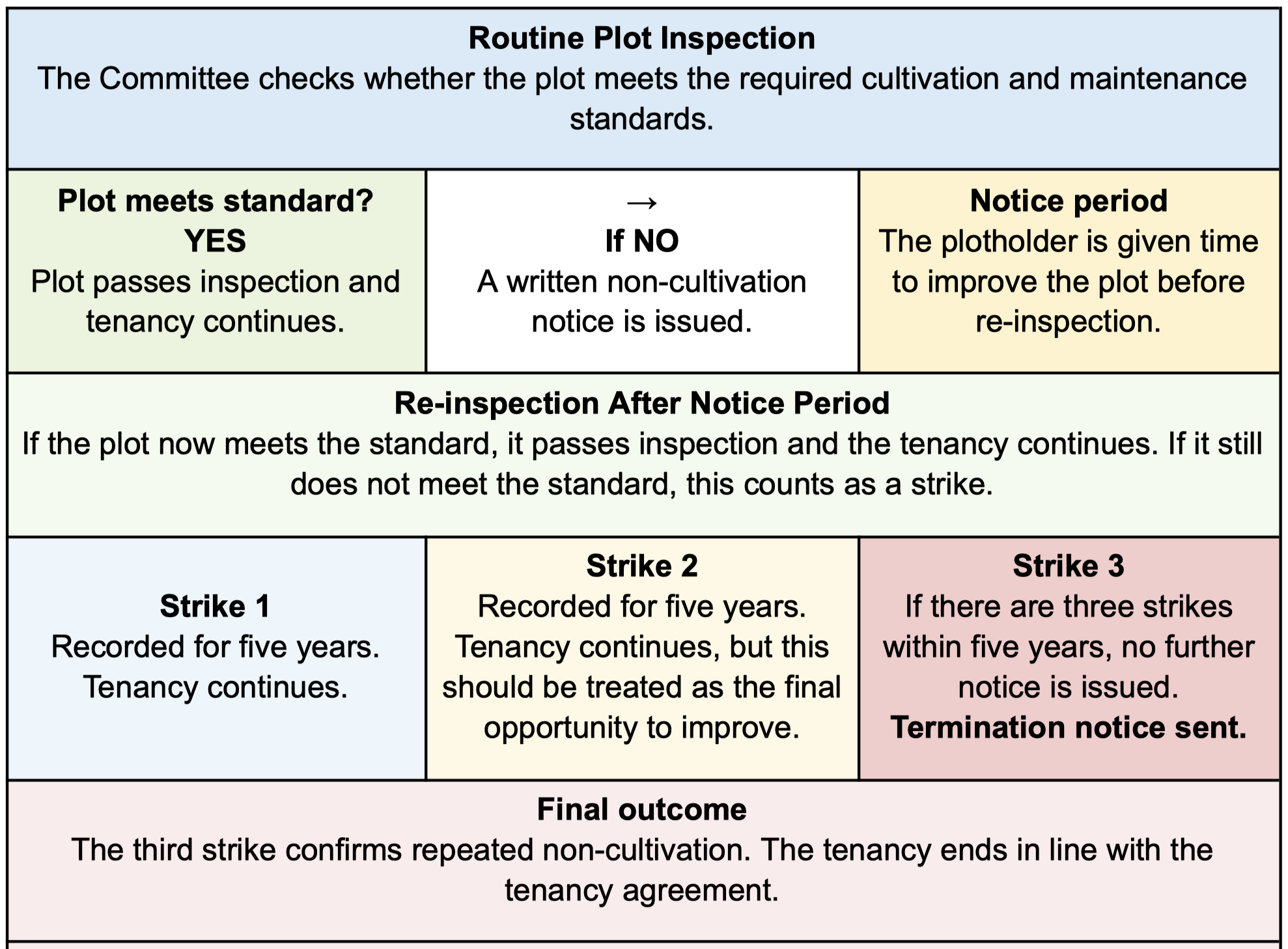
After routine inspections, a plotholder may receive a written non-cultivation notice if their plot does not meet the required standard.
Each non-cultivation notice counts as one strike. If a plotholder receives two strikes and then fails another inspection within five years, they will not receive a third notice. Instead, they will receive a termination notice and their tenancy will end in line with the tenancy agreement.
The third strike is not another chance to improve the plot. The policy is for repeated non-cultivation, not a one-off problem.
Plotholders Struggling to Maintain Their Plot
If you are struggling to maintain your plot because of health, personal or other difficulties, please contact the Committee as early as possible. Plotholders should also consider;
- Can the plot be adapted to make it easier to manage?
- Can family, friends or other plotholders help?
- Are the difficulties temporary, or would giving up the plot be more realistic?
The committee will try to help where it can, especially with temporary difficulties. Support depends on volunteer availability and cannot always be guaranteed.
For health, personal or other difficulties to be considered by the Committee in the context of Inspections and Non-Cultivations, the Committee must be informed prior to the Inspection and Non-Cultivation notice.
Repeated failure to cultivate and maintain a plot is unfair to others and may lead to termination of the tenancy.